
Beauty Tools That Actually Work: My Keep vs. Toss List
The average person abandons a new beauty tool within three weeks of buying it. Three weeks. That figure tracks with consumer behavior data across personal care product categories—and it absolutely tracks with my own buying history. The $180 facial steamer I used twice. The microcurrent wand I blamed on “slow results” when really I just stopped using it after ten days. The gua sha collection I kept buying in different shapes as if the stone geometry was the problem.
After a decade of filtering the noise, here’s what actually earned a permanent spot in my routine—and what didn’t. Specific tools, specific prices, no vague categories.
Face Tools: What Each One Actually Does
The face tool market is chaotic. Every season brings a new LED configuration, a new microneedling depth, a new “clinical-grade” device claiming in-office results at home. Most of them work—just not as dramatically as the marketing implies, and not for everyone. Here’s a direct breakdown:
| Tool | Best Pick | Price | What It Actually Does | Worth It? |
|---|---|---|---|---|
| Cleansing brush | Foreo Luna 4 | $219 | Removes 99% more makeup residue than hands alone via T-Sonic pulsations | Yes, for daily full-coverage wearers |
| Microcurrent device | NuFace Trinity | $339 | Tones facial muscles with 335 microamps of low-level current | Only with 5x/week use for 60+ days |
| LED mask | CurrentBody Skin LED Mask | $380 | Red (633nm) collagen stimulation; near-infrared (830nm) for deeper tissue | Yes—one of the few with published clinical data |
| Gua sha | Mount Lai Rose Quartz | $28 | Lymphatic drainage, puffiness reduction | Yes—cheap and genuinely effective |
| Derma roller | Dr. Roller 0.25mm | $15 | Microchannels that increase serum absorption temporarily | Yes at 0.25mm; deeper lengths require more caution |
| Jade roller | Various | $10–$60 | Cooling, minor surface lymphatic movement | Marginal—gua sha does more |
| Facial steamer | Panasonic EH-SA31 | $80 | Opens pores before extractions or masking | Situational only |
Is the NuFace Trinity worth $339?
Only if you’ll use it five times a week for at least two months without skipping. Microcurrent technology is cumulative—single sessions produce subtle, temporary results. The people who swear by the Trinity are the ones who treated it like brushing teeth. Non-negotiable, five minutes every morning, done. If that’s not your personality with routines, it will sit unused after week three and you’ll be out $339.
For what it’s worth: because the current runs at 335 microamps (below the sensation threshold), you feel nothing during use. That makes it genuinely easy to run while watching something, which is probably why the consistent users stay consistent.
Foreo Luna 4 vs. a $10 drugstore silicone scrubber
The Luna 4 delivers 8,000 T-Sonic pulsations per minute through medical-grade silicone. A cheap drugstore silicone pad delivers manual friction. Both are more hygienic than nylon brush heads, which trap bacteria in the bristles. The real difference is that 8,000 pulsations per minute creates movement through the skin rather than just across it—measurably better at dislodging congestion deep in pores.
Occasional makeup wearers: save the $200. Full-coverage foundation daily or persistent blackheads along the nose: the Foreo is worth the jump.
The Gua Sha Protocol Is Simpler Than the Internet Makes It
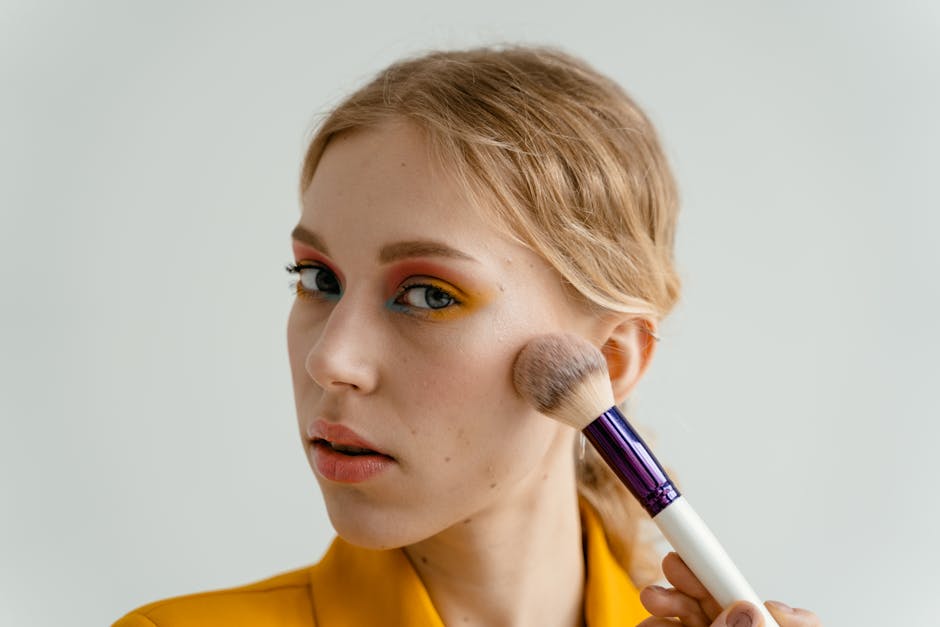
Any flat-edged tool made from non-porous stone or stainless steel works. Technique is everything: always use with a facial oil as a lubricant, apply light upward pressure, three to five passes per zone. Morning use reduces overnight puffiness most visibly. Evening use aids absorption of whatever serum you apply afterward. You don’t need a specific brand, a particular crystal shape, or anything over $35.
Hair Tools: Where to Spend and Where to Stop Yourself
This is where the most expensive mistakes happen—in both directions. People buy the $35 drugstore straightener, damage their hair over months, blame their hair type, and give up. Or they drop $600 on a Dyson Airwrap without understanding what it’s actually designed to do and end up disappointed because it won’t give them the defined curls they wanted.
Hair tools are one category where price genuinely does correlate with performance. But only up to a point, and only for specific needs.
The Dyson Airwrap ($599) — who it’s actually built for
The Airwrap uses the Coanda effect: high-velocity air that wraps hair around the barrel through suction rather than heat or clamps. Maximum temperature sits around 150°C versus the 200–230°C that traditional wands reach. That temperature gap matters enormously for color-treated, fine, or already-damaged hair where high heat accumulates visible damage over weeks of use.
What it excels at: loose waves, blowout-style volume, smoothing without the flat-iron look. What it doesn’t do well: tight, defined curls with lasting hold. For that specific outcome, the T3 Whirl Trio at $230 beats it and costs $370 less. The Airwrap is also slow—30 to 45 seconds of contact per barrel section. On long, thick hair, full styling can take 45 minutes. Know exactly what you’re buying before spending $599.
GHD Platinum+ ($279) — still the benchmark for straighteners
I’ve used straighteners since I was fifteen. The GHD Platinum+ is the first one I’d describe as genuinely intelligent. Its predictive technology samples temperature 250 times per second and adjusts wattage to hold exactly 365°F (185°C)—the optimal range for most hair types without accumulating structural damage.
Budget straighteners fluctuate between 200°F and 450°F without regulation. That inconsistency—not a single hot session—is what causes split ends over months of daily use. The BaByliss Pro Nano Titanium at $100 is the best mid-range alternative: consistent plates, solid glide, and it holds temperature reasonably well. But if you straighten daily, the GHD pays for itself in healthier hair over a year.
And if you’re investing in quality heat tools, the right hair care extends their results significantly. A good keratin shampoo for smooth hair extends your blowout and reduces the heat styling frequency you need in the first place.
When the Revlon One-Step ($60) is genuinely enough
The Revlon One-Step Hair Dryer & Volumizer combines a dryer and a round brush in one tool. For medium-length hair without severe frizz, it handles 80% of what the Dyson Supersonic ($430) does for blow-drying. Start here. When you’ve genuinely outgrown it—when you need faster drying time, more precise airflow, or the heat is visibly damaging fine strands—then consider the Shark HyperAir at $280 or the Dyson Supersonic. Not before.
Skin Devices Ranked by How Much I Actually Noticed
Ordered by impact—not by price, not by how much marketing they have behind them.
- PMD Personal Microderm ($159) — Real aluminum oxide crystals on a rotating disc. After three weekly sessions, my foundation sat noticeably more evenly on my skin and my serums absorbed faster. This is the highest-ROI device I own for texture improvement. Use weekly, not daily—over-exfoliation is real.
- CurrentBody Skin LED Light Therapy Mask ($380) — Red light at 633nm stimulates fibroblast activity; near-infrared at 830nm reaches deeper tissue. I saw measurable firmness improvement around my jaw after eight weeks of use at five sessions per week, ten minutes each. It’s one of the few consumer LED devices with peer-reviewed data supporting its specific wavelength configuration. Most Amazon knockoffs don’t publish their actual output wavelengths.
- Derma roller, 0.25mm ($10–$15) — At this depth, you’re not inducing collagen. You’re creating temporary microchannels that increase serum absorption by approximately 40% in the hour following. Use before vitamin C or hyaluronic acid. Replace every 6–8 uses—dull needles tear rather than pierce.
- Silicone facial cupping sets ($15–$25) — Suction that shifts fluid from puffy areas. Useful around the jawline and cheeks. Results last 30 to 60 minutes, useful before an event or a video call.
What I stopped using entirely
The HiMirror Smart Mirror at $199 uses a camera to score your skin. It flagged pores on my nose as wrinkles and created genuine anxiety about things that weren’t problems. A solution that manufactures problems. I returned it after two weeks.
Building a device routine without wrecking your barrier
Don’t buy everything at once. Using multiple active devices simultaneously—especially anything involving physical exfoliation or microchanneling alongside chemical exfoliants—will compromise your skin barrier faster than it will improve your skin. Introduce one new device every four to six weeks. That pacing is the only way to know what’s actually working and what’s causing the irritation.
My Brush Hierarchy (Cheap Sponges Ruin Good Foundation)
I watched a friend spend $65 on Armani Luminous Silk and apply it with a latex wedge sponge. It looked cakey and patchy, and she thought the foundation was the problem. The foundation was fine. The tool ruined it.
The Beautyblender at $20 is the right shape and density for stippling without streaks. The Real Techniques Miracle Complexion Sponge at $10 is 90% as effective. Buy the Real Techniques version first. If you want the slight edge in blending radius and sponge resilience after washing, upgrade to the Beautyblender. Don’t start at $20 if you haven’t confirmed a sponge is even your preferred application method.
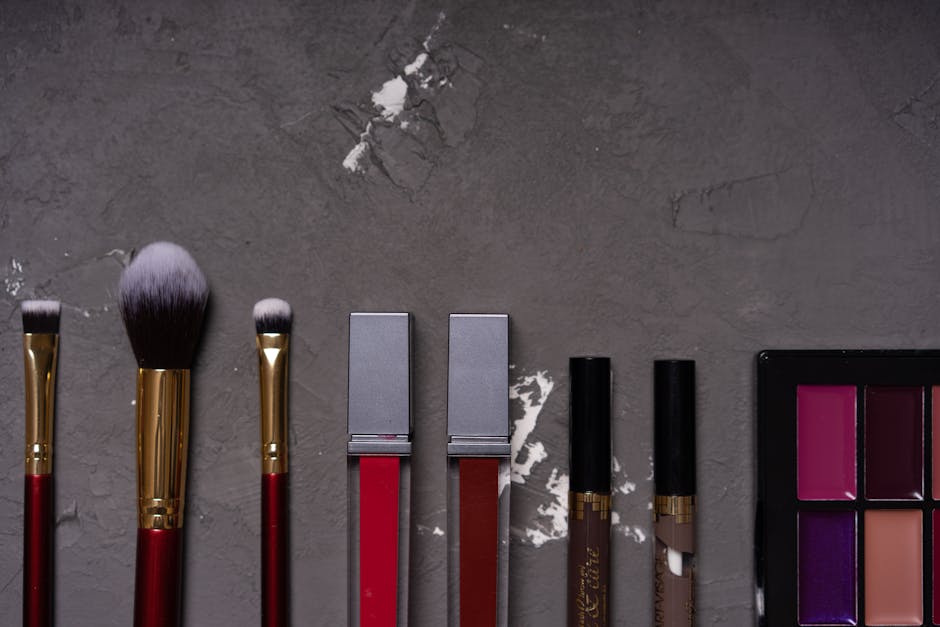
For powder products, choosing the right foundation brush makes a measurable difference—particularly on textured skin where incorrect bristle density drags and catches. My pick is the Sigma F80 Flat Kabuki at $26. Dense flat-topped synthetic bristles buff product into skin rather than pushing it across the surface.
The brushes I use every day without exception
- Sigma F80 Flat Kabuki ($26) — foundation, concealer, base work
- Zoeva 227 Luxe Soft Definer ($14) — crease blending and shadow diffusion
- Hakuhodo J5523 powder brush ($42) — setting powder and blush
- Wayne Goss Brush 00 ($14) — tight liner placement
The Hakuhodo is the one splurge I’ll defend every time. Japanese squirrel-hair brushes pick up and deposit powder pigment differently than synthetic alternatives at a purely tactile level—the density distribution and softness produce a more even diffusion with blush and highlighter that I haven’t replicated with any synthetic brush under $80.
Brush cleaning: the step that ruins results when skipped
Product buildup on bristles creates uneven texture transfer and muddy pigment. Dirty brushes also directly cause breakouts. The Sigma Spa Express Brush Cleaning Mat at $25 suctions to a sink and cleans brushes in under three minutes. Weekly deep-cleaning with a gentle soap, daily spot-cleaning with isopropyl-alcohol spray between washes—any brand works for the spray, the active ingredient is identical across all of them.
Questions I Keep Getting Asked About Beauty Tools
How do I know when a tool isn’t working vs. when I’m not using it correctly?
Give any new tool eight consistent weeks before drawing conclusions. The exception: if you’re seeing irritation, redness, or new breakouts after two to three weeks of consistent use, stop—those are signals the tool or the frequency is wrong for your skin, not signals to push through. Efficacy takes time. Damage shows up fast.
Can I use a cleansing brush with active ingredients in my routine?
Yes, but not at the same time. If you’re using a cleansing brush in the evening, apply your active ingredients—retinol, AHAs, BHAs—after you’ve used and rinsed the brush. Running a cleansing brush over already-applied tretinoin or glycolic acid pushes active concentration deeper and increases irritation risk significantly. Sequence matters more than most product instructions acknowledge.
Do LED face masks actually do anything?
The mechanism is established. Red light at 630–660nm stimulates fibroblast activity, which drives collagen synthesis. A 2014 study in Photomedicine and Laser Surgery documented measurable improvements in skin complexion and elasticity following LED treatment. The catch with at-home devices is irradiance: clinical machines deliver higher power density, so you need more sessions to reach comparable outcomes. The CurrentBody mask at 660nm and 830nm is one of the few consumer products with independently published clinical data behind its specific configuration—which is more than most competitors can say.
What’s the single tool worth buying first?
The Revlon One-Step at $60. It cuts morning routine time significantly, performs across most hair types and lengths, and delivers results you’ll see immediately. Every other tool on this list is a second or third purchase, not a first. Start practical, then specialize.
The next generation of beauty tools is moving toward real-time personalization—devices that assess your skin’s moisture barrier before recommending treatment intensity, styling tools that detect strand condition and adjust heat accordingly. That’s genuinely promising. But the underlying truth won’t shift: consistency beats quality of device, and technique beats price point almost every time. Better tools make the fundamentals easier to execute. They don’t replace them.