
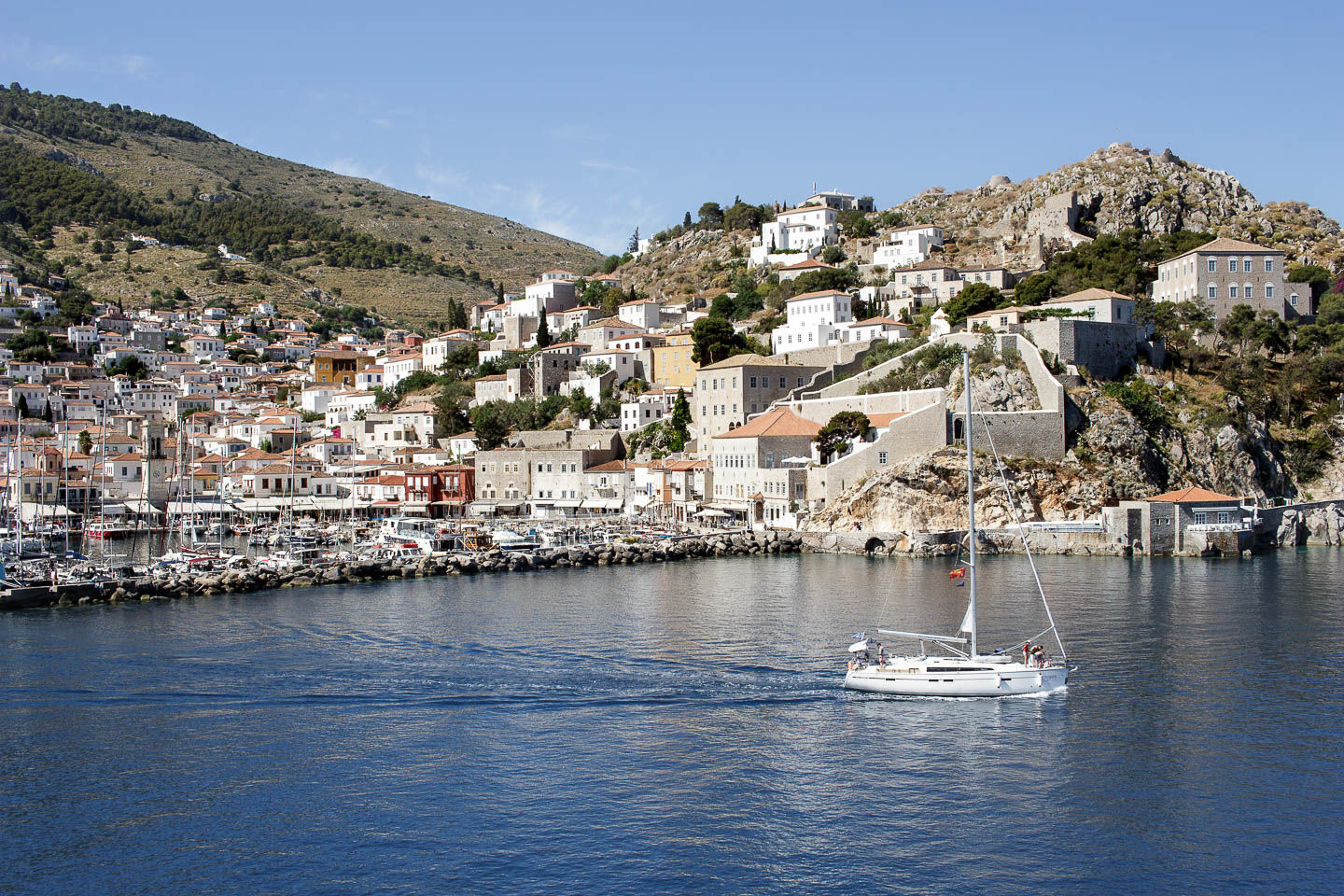
Hydra has zero cars. No motorbikes. No taxis. No Ubers. Every package, every barrel of wine, every hotel mattress arrives by donkey. That single fact changes everything about how this island feels — and what it does to your skin.
Greek islands have never really gone out of fashion, but the mainstream circuit — Santorini, Mykonos, Rhodes — is genuinely crowded now. Hydra is 65 square kilometers of preserved Ottoman-era architecture, cobblestone paths, and one of the cleanest harbors in the Aegean. For anyone whose skincare routine involves avoiding pollution, this island functions as a live experiment in what your skin can actually do when the air is clean.
Why Hydra Is Completely Different From the Greek Islands You’ve Already Visited
The no-cars rule isn’t marketing. It’s been enforced by law since the 1970s. You get there one way: the Hellenic Seaways hydrofoil from Piraeus, about 1.5 hours from Athens. When you step off, the port sounds like it did 200 years ago. Waves. Donkeys. Conversations. No engine noise at all.
This matters specifically for beauty travelers because urban pollution is one of the primary documented causes of accelerated skin aging. Particulate matter from traffic exhaust binds to skin, breaks down collagen, and triggers free radical damage. Hydra simply doesn’t have that problem. On most summer days, the air quality is comparable to open ocean.
What the Aegean Water Quality Does to Your Skin and Hair
The Saronic Gulf — where Hydra sits — is notably cleaner and less saline than the eastern Aegean. Hotel pools are largely irrelevant here because the best swimming is directly from rocks. Spilia, a five-minute walk from the port, drops straight into clear water with visible depth at 10 meters.
Swimmers consistently report their hair feeling softer after a week of daily seawater swimming here compared to pool-heavy destinations. The low chlorine exposure combined with natural mineral content is the straightforward explanation. After each swim, rinse with fresh water and apply a light moisturizer — nothing more needed. Your skin will tell you within two days.
The Architecture Forces You to Move, and That Matters
Every path on Hydra is uphill. Not gently uphill — aggressively uphill. The town cascades up a steep hillside, and reaching any of the island’s monasteries requires genuine hiking. The Monastery of the Prophet Elias sits at 590 meters. The two-hour round trip is one of the most physically demanding and visually rewarding things you can do on a Greek holiday.
The practical result: you will walk more on Hydra in three days than in two weeks at a resort. Your circulation improves. Your lymphatic system works properly. Whether or not you use the language of wellness travel, the cumulative physical effect of daily elevation gain on your skin and energy is measurable by day four.
The Population: 2,000 People, Zero International Chains
Hydra has roughly 2,000 permanent residents. There is not a single international hotel chain on the island. No Marriott, no Hilton, no Accor property. The absence of mass tourism infrastructure means local pharmacies stock real Greek skincare brands at local prices — not the tourist-facing decorative packaging you see in Santorini souvenir shops. This is where the actual beauty travel value sits.
The Greek Beauty Brands Worth Buying Here — and What to Skip
Hydra’s pharmacies near the port carry the full professional range of Greek skincare. Not just the gift-shop versions. Here’s what’s worth your luggage space.
Korres: Buy It Here, Not at Home
Korres is the most internationally distributed Greek skincare brand, built on botanical ingredients sourced across Greece. The price difference between buying locally and buying abroad is significant. The Wild Rose Vitamin C Brightening Serum runs around €32 locally; the same product retails at $65 or more in the US and UK. Stabilized vitamin C at 15% with rosehip extract — it genuinely performs.
The Yoghurt Advanced Repair Sleeping Facial (€24 locally) is their most practical pick for a travel kit. Thick, fragrance-light, effective at rehydrating post-sun skin overnight. The Greek Yoghurt Probiotic Superdose Face Mask is another strong option at around €18 — both worth stacking in checked luggage. The main pharmacy near the harbor entrance carries the full range.
Apivita: The Brand Most Tourists Walk Past
Apivita is a Greek pharmacy brand built around bee-derived ingredients — propolis, honey, royal jelly — combined with botanical extracts from Greek herbs. Almost no one outside Greece knows it. The single-use Express Beauty face masks (around €4 each) are the best impulse buy in any Greek pharmacy. The honey and aloe variant is specifically good for post-sun repair.
The Propolis Gel (€18 for 10ml) has documented antimicrobial properties for blemish-prone skin and outperforms most of the “clarifying” products triple the price in department stores. Their Queen Bee Day Cream SPF30 — the anti-aging line built on royal jelly — runs around €45 locally. You’ll pay €70 or more elsewhere, if you can find it.
What to Skip: The Harbor Gift Shop Trap
The decorative olive oil soaps sold near the port are mostly fragrance, glycerin, and a label with a painted donkey. Olive oil content is often minimal. Real Greek olive oil skincare comes from pharmacy brands, not gift shops. One legitimate exception: Mastic Spa, available at select Hydra pharmacies, uses Chios mastic resin — a natural resin with documented antibacterial and anti-inflammatory properties. Their Mastiha Cleansing Foam (€14) is the genuine article and makes a far better souvenir than anything in decorative paper near the water.
The Skincare Mistake Almost Every Visitor Makes
Assuming olive oil in the local food offers UV protection. It does not. The Aegean sun hits UV index 9 to 11 in peak summer. Use SPF50 broad-spectrum sunscreen. Reapply every two hours. The Mediterranean diet improves your skin from the inside over time — it does not block UVA radiation. Tanning well and tolerating UV damage are not the same thing.
When to Go — and Exactly Who Should Skip Hydra
Is Peak Summer Worth It?
Barely. July and August bring Athenians to Hydra in numbers that temporarily overwhelm the island’s 2,000-person infrastructure. Rooms at anything decent run €180 to €400 per night. The harbor crowds by midday. The thing that makes Hydra worth visiting — its quiet, preserved character — gets significantly diluted. If July or August is your only window, book at least six months ahead and commit to being at the harbor before 9am to have it to yourself.
What’s the Actual Best Time?
Late May through mid-June, or September through mid-October. Temperatures sit at 22–27°C, the water is warm enough for comfortable swimming, and the island functions properly. Late September specifically is the sweet spot: crowds have cleared, the evening light is exceptional, and you can get a table at Douskos Taverna — the best traditional restaurant on the island — without a reservation and without planning three weeks ahead.
Who Should Choose a Different Island Entirely?
If you want a beach club with sun loungers and pool service, Hydra is the wrong destination. There are no sandy beaches — swimming is from rocks and small pebbly coves. If you have significant mobility limitations, the terrain is genuinely difficult: steep, uneven cobblestone throughout. If your idea of a Greek holiday involves a hotel spa treatment menu, look at the Grace Santorini hotel or Mykonos’ Cavo Tagoo property instead. Hydra rewards walkers and people who find satisfaction in an unplugged, historically preserved environment. That’s not everyone, and that’s fine.
A 3-Day Beauty-Focused Hydra Itinerary
Three days is the minimum to feel the island properly. Here’s how to structure it with your skin and wellness in mind.
| Day | Morning | Afternoon | Evening | Skincare Priority |
|---|---|---|---|---|
| Day 1 | Arrive by hydrofoil from Piraeus. Walk the harbor, check in. Stop at the port pharmacy — full Korres and Apivita haul before you forget. | Swim at Spilia rocks, five minutes from the port. Seawater exposure, SPF50 reapplied every two hours. | Dinner at a harbor taverna. Order the Greek salad with local olive oil and actually eat it. | Apply Korres Yoghurt Sleeping Facial after your post-swim rinse. Let the mineral exposure do its job overnight. |
| Day 2 | Hike to Monastery of Prophet Elias. Leave by 7am to beat heat. Two-hour round trip, 590 meters elevation, SPF50 mandatory. | Water taxi to Vlychos beach (€5 each way). Afternoon swim and rest. Reapply Apivita Queen Bee Day Cream SPF30. | Explore upper town. Find Mastic Spa products in the pharmacy near Tombazi square. | Apivita Express Beauty mask after sun exposure — honey and aloe variant for post-UV repair. |
| Day 3 | Early coffee at the port, then walk to Kamini village (20 minutes). Smaller harbor, quieter pace, local bakery opens at 7am. | Final swim. Rinse hair from a rock in the sea before heading back — skip the beach shower. | Afternoon hydrofoil back to Piraeus. Final pharmacy stop for anything missed. | Pack skincare purchases in checked luggage. Serums over 100ml go in checked bags, not carry-on. |
The itinerary is deliberately light on scheduled activities. That’s deliberate. Hydra works best when you let the environment take over — walk, swim, eat well, sleep early. The value for beauty travelers isn’t in a treatment menu or a wellness program. It’s in the cumulative effect of three days without pollution, with genuinely good food, clean water, and daily physical movement through steep terrain.
For a beauty-focused Greek island trip, Hydra is the clear pick. Book late September, minimum three nights, stay somewhere in the upper town if you can manage the stairs, and bring an extra tote bag for the Korres haul. That’s the specific recommendation. Everything else is details.