
Social media has a nail art credibility problem. Every other tutorial is labeled “easy” or “beginner-friendly,” and then you watch someone execute perfect geometric lines in 30 seconds with a brush the width of a single hair. That is not easy. That is years of muscle memory dressed up as an afternoon project.
The good news: genuinely simple nail art does exist, and it looks significantly better than plain polish. You don’t need a nail tech’s tool kit or a steady hand built from years of practice. But you do need to know which designs actually translate to someone working on their own hands, using drugstore supplies, with limited patience for drying time.
This breaks down the designs that are truly doable, the tools worth buying, the mistakes that tank most attempts, and the products that actually justify their shelf space.
What “Easy” Nail Art Actually Means When You’re Working at Home
Easy nail art at home meets three criteria: it requires no brush control, it forgives minor smudges, and it doesn’t need a second person. That rules out most of what gets labeled “easy” online.
Real difficulty breaks into three tiers:
Tier 1 (zero skill required) includes designs where tools, tape, or stickers do all the work. Sponge gradient nails, negative space tape designs, peel-off glitter, nail foils — all of this belongs here. Your job is preparation and patience, not precision.
Tier 2 introduces some hand tools, like a dotting tool or a stamping plate, but the patterns are repetitive and mistakes look intentional — polka dots, simple florals, stamped lace. Most people get here within their first real attempt.
Tier 3 is freehand line work, detailed character art, intricate gradients, and anything requiring a steady controlled stroke. Not beginner territory, regardless of how tutorials label it.
The mistake most people make is attempting Tier 3 designs with Tier 1 skills. The result is not imperfect-but-charming. It looks like a smear. Stick to Tier 1 and Tier 2 until your tools feel less foreign in your hand.
Why Your Non-Dominant Hand Is the Real Variable
Every nail artist calling something “easy” is finishing on their non-dominant hand last. Getting decent results on your dominant hand is manageable. Your non-dominant hand is where designs fall apart — the angle is wrong, pressure is inconsistent, and your wrist locks up. Any design you choose should account for this. Sponge techniques, tape, and stick-on nail art strips handle this problem automatically. Freehand anything does not.
The Time Factor Most Tutorials Compress
Realistic time for a complete nail art set at home: 45 to 90 minutes. That includes base coat, two color coats, the design itself, and two layers of topcoat with drying time between each step. Skipping wait time causes smearing, bubbling, or topcoat dragging your design sideways. Tutorials compress this into a two-minute video. Real application doesn’t.
Designs Ranked by Difficulty: A Straight Answer
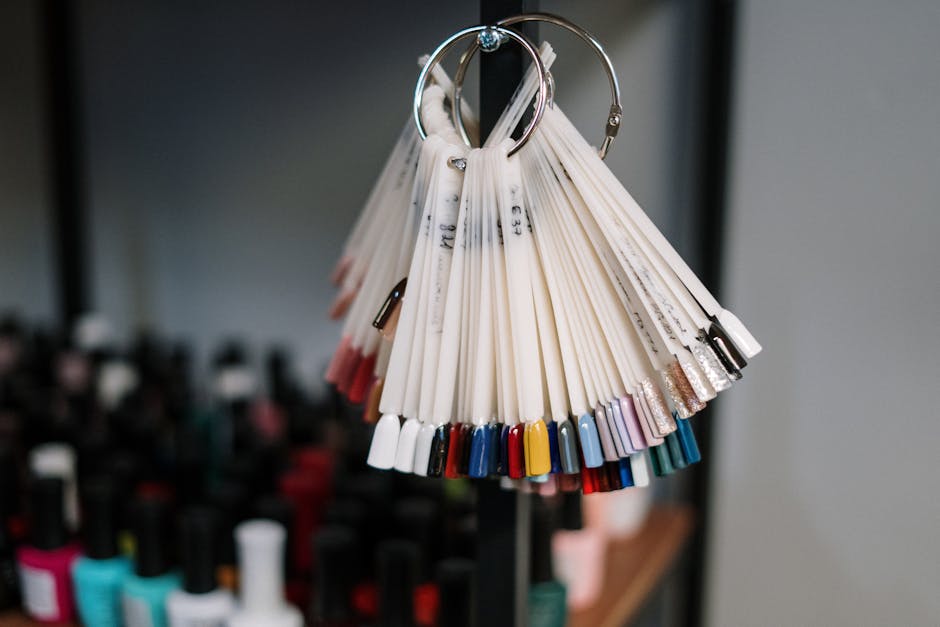
Below is an honest ranking of popular at-home nail art designs. Skill ratings reflect what it actually takes to execute them on both hands, not just a demonstration hand:
| Design | Skill Level | Time After Base Coat | Main Tool Needed | Mistake Risk |
|---|---|---|---|---|
| Nail stickers or decals | Beginner | 5–10 min | None | Very Low |
| Nail foil transfer | Beginner | 10–15 min | Foil adhesive, foil sheets | Low |
| Tape geometric or negative space | Beginner | 15–20 min | Striping tape | Low (peel before dry) |
| Sponge ombre gradient | Beginner | 20–25 min | Makeup sponge | Low |
| Dotticure (polka dots) | Beginner–Intermediate | 15–20 min | Dotting tool or bobby pin | Low |
| Stamping plate designs | Intermediate | 20–30 min | Stamping plate and scraper | Medium |
| Water marble | Intermediate | 30–45 min | Cup of water, toothpick | Medium–High |
| Freehand florals or line art | Advanced | 45+ min | Detail nail art brushes | High |
Foils and stickers sit at the top of any beginner’s starting list. They look intricate but require no technique. KleanColor Nail Foil Transfer Stickers (around $5–8 for a multi-pack) and Born Pretty nail foil adhesive gel are reliable starting points that need no UV lamp and no special skill — just clean nails and patience while the adhesive turns tacky.
The Tools That Actually Matter (And One You Can Skip)
Most at-home nail art kits sold online are bloated. Twenty tools come in the box; you’ll use three. Here’s what earns its place.
Tools Worth Buying
A dotting tool is the single most useful instrument for beginners. It costs $3–6 for a dual-ended set, handles dots, simple florals, and teardrop shapes, and you can substitute a bobby pin or toothpick if needed — though a real tool gives more control over dot size. The Winstonia double-ended dotting tool set (~$6) covers every size you’ll need across different nail widths.
Striping tape creates geometric designs that look precise without requiring any hand control. Born Pretty nail striping tape runs about $5–8 for a multi-pack in multiple widths and metallic finishes. Lay it on the nail, paint over or around it, then peel immediately before the polish sets. The result is a clean division that would take years of freehand practice to replicate.
A makeup sponge — not a specialty purchase — produces gradient ombre nails automatically. Brush two colors side by side on the sponge, dab onto the nail 5–7 times, build up color in layers, clean the skin edges with acetone. The blending happens from the sponge contact, not from technique. Gradient nails photograph like salon work and take about 20 minutes total.
Nail stamping plates and a clear silicone stamper are worth learning early. A basic plate set from Bundle Monster or Moyra costs $10–20 and contains dozens of pre-engraved patterns — lace, geometric, floral — that transfer to the nail in one press. The learning curve is getting the scraper angle and speed right, which clicks within five practice tries.
The One Tool to Skip
Detail nail art brushes. Unless you’re committed to regular freehand practice, a set of liner brushes will sit unused. Everything a fine brush handles, another tool does better for a beginner. The only partial exception is a fan brush for smear-marble effects, which some people find easier than the water cup technique. Otherwise, skip the brush set entirely until you’ve outgrown everything else.
Topcoat Is Not Optional
Seche Vite Dry Fast Top Coat (~$8) is the most consistently recommended fast-dry topcoat among DIY nail art users for a clear reason — it sets in under two minutes and doesn’t drag the design underneath. A good topcoat isn’t primarily about shine. It protects the design from the inevitable hand-bumping that happens while waiting for nails to dry. Spending 45 minutes on a design and losing it to a chair arm is an avoidable outcome.
The One Fix That Works on Every Shaky Design
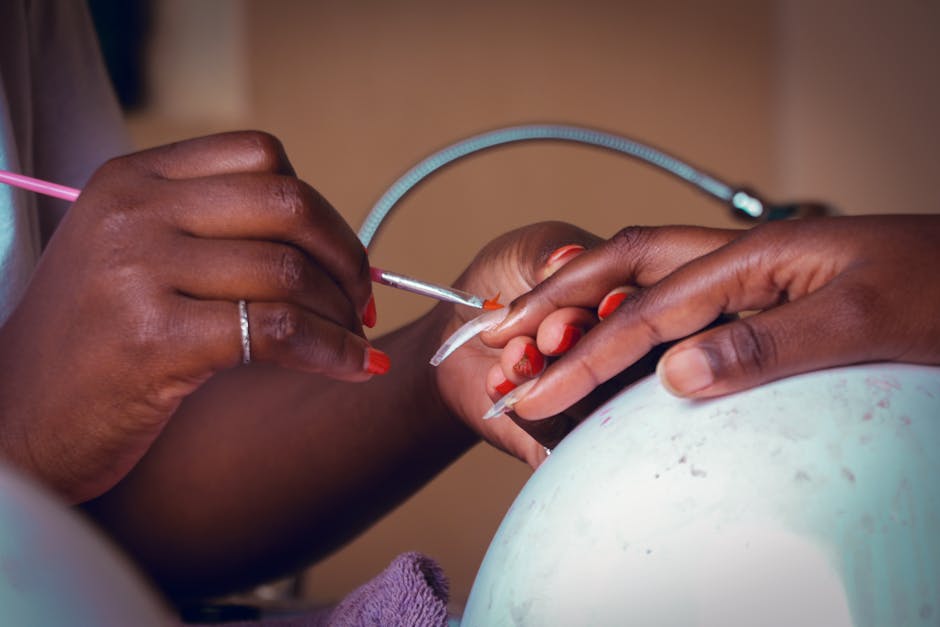
Cleanup. That’s it. A thin brush dipped in 100% acetone, run along the skin line and cuticle edge, removes stray polish in 60 seconds and makes most imperfect nail art read as intentional. An angled eyeliner brush or a dedicated cleanup brush soaked in acetone does this without touching the nail surface. This single step separates DIY that looks homemade from DIY that looks deliberate — and it gets skipped more than any other step.
Six Designs That Consistently Work on the First Attempt
Ranked by visual impact — how strongly each reads as intentional nail art rather than a happy accident:
- Two-tone tape negative space: Paint nails a light base and let it cure fully. Lay striping tape diagonally across each nail. Brush a second color over the exposed section. Peel the tape while the polish is still wet. Result: a razor-clean geometric diagonal that looks intentionally modern. Total additional time: 20 minutes.
- Sponge ombre gradient: Pick two colors in the same color family — a lighter and deeper shade. Brush both side by side on a makeup sponge with slight overlap at the middle. Dab onto the nail 5–7 times, building up density. Clean edges with acetone. This reads as a professional gradient to anyone who doesn’t know the method.
- Foil accent nail: Paint all nails in one solid color. On one accent nail, apply nail foil adhesive, wait for it to turn tacky (about 60 seconds), then press foil directly over it and peel back. The foil adheres in a crinkled metallic pattern that looks expensive. The Nail Bliss Chrome Foil Kit (~$12) includes adhesive and multiple foil options.
- Dotticure scatter: Fully dry base color first. Load a dotting tool with a contrasting color and place dots in a random scatter, diagonal row, or corner cluster. Two or three dot sizes add depth. Simple, graphic, and consistently polished-looking.
- Half-moon negative space: Place a small circular hole-reinforcer sticker from any office supply store ($2 for a pack of hundreds) at the base of each nail. Paint over the entire nail. Peel the sticker while the paint is wet to reveal a clean curved negative space at the base. French manicure meets minimalism, with zero brushwork.
- Stamped pattern: Once the scraper technique clicks — usually within five practice runs — you can reproduce lace, geometric, or floral patterns on every nail in under five minutes. The Bundle Monster BM-S115 plate (~$8) contains 26 engraved patterns and is specifically suited to beginners because the designs are bold enough to transfer cleanly.
The Actual Reasons Most At-Home Nail Art Fails
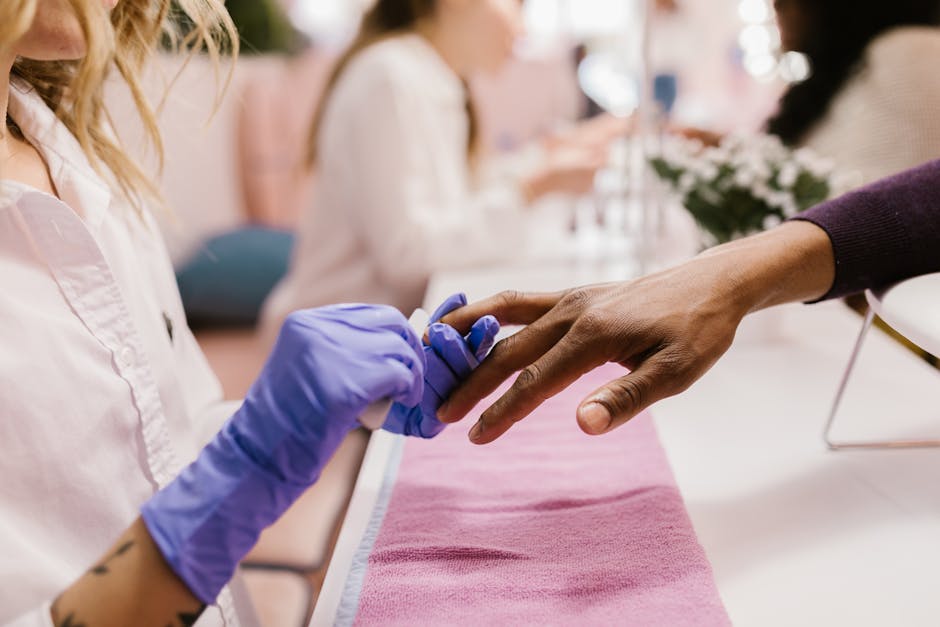
Most DIY nail art fails for reasons unrelated to artistic ability. These are fixable problems with direct causes.
Polish That’s Too Old or Too Thick
Gloopy polish drags across the nail instead of flowing, and it never dries with a clean surface. Essie Expressie Quick-Dry polish (~$10) and Sally Hansen Miracle Gel ($10–12) are both formulated to stay thin and consistent over time. If existing polish has thickened, add one drop of nail polish thinner — not remover, which degrades the formula — and roll the bottle between your palms. Two-year-old drugstore polish will undermine any design regardless of technique. Replace it.
Missing the Base Coat Step
Orly Bonder Rubberized Base Coat (~$10) creates a slightly tacky grip surface that polish bonds to more securely. Without it, designs lift from the edges faster, especially on naturally oily nail beds. Base coat also prevents darker colors from staining the nail plate, which matters when you’re switching frequently between colors for nail art.
Peeling Tape Too Late
Striping tape must come off before the polish at the tape edges dries — not when it’s slightly tacky, but while it’s still visibly wet. If you wait past that window, the dried polish fuses to the tape, and peeling pulls chunks of color with it. Pull within 60 seconds of painting over tape. This is the most common single reason tape nail art attempts fail.
Topcoat That Moves the Design
Some topcoats are too viscous to layer safely over nail art. They drag the design on contact. Seche Vite applies thinly enough to float on top without disturbing what’s underneath. Apply in one smooth stroke per nail — going back over wet topcoat with the brush smears the design. One stroke, then hands still.
Polish and Product Picks That Deliver Results
| Product Type | Recommended Pick | Price | Why It Works |
|---|---|---|---|
| Quick-dry color polish | Essie Expressie | ~$10 | Thin formula, wide flat brush, dries in 60 seconds |
| Gel-effect polish (no lamp) | Sally Hansen Miracle Gel | ~$12 | High pigment, lasts 8–10 days without major chipping |
| Nail foil kit | Nail Bliss Chrome Foil Kit | ~$12 | Adhesive and foils included, no UV lamp required |
| Rubberized base coat | Orly Bonder | ~$10 | Grip surface reduces chipping, works on oily nail beds |
| Fast-dry topcoat | Seche Vite Dry Fast | ~$8 | Sets in under 2 minutes, doesn’t drag nail art designs |
| Striping tape | Born Pretty Nail Striping Tape | ~$6 | Multi-width, metallic and solid color options |
| Dotting tools | Winstonia Dual-Ended Set | ~$6 | Multiple sizes, precise application |
| Stamping plate set | Bundle Monster BM-S115 | ~$8 | 26 patterns, bold engravings that transfer cleanly |
OPI Nail Lacquer ($11–13 per bottle) stays workable long enough during tape and foil designs without skinning over prematurely. Zoya polishes ($10–12) are worth it for anyone avoiding formaldehyde and toluene — they’re 10-free and perform comparably to OPI in pigmentation and consistency.
A complete functional at-home nail art setup costs $40–55: one good base coat, one fast-dry topcoat, two or three polish colors, and one technique tool — tape, foil kit, or stamping plate. That combination produces results worth repeating.
Tags: at home nail art, beginner nail designs, DIY nails, easy nail art, nail art